
Durham County Criminal Court Records
A Durham County criminal court record is the court-maintained case file, not just the first police or jail entry. In Durham County, the Clerk of Superior Court keeps records for both Superior Court and District Court. District Criminal/Traffic Records handles Durham County criminal and traffic court dates, courtrooms, citation payments, bond forfeitures, vehicle seizures, and limited driving privilege matters tied to DWI or in-state speeding. Superior Criminal handles Durham County CRS bond forfeitures, superior criminal dates, courtrooms, attorney information, and copies of CRS files.
The court level depends on the charge and stage. District Court handles misdemeanors, infractions, traffic matters, and many first-stage criminal matters. Superior Court handles felony cases and appeals from District Court. Magistrates may be involved at the start through warrants, initial criminal process, first appearances, and release conditions. Once a case is docketed, the court record tracks events that can differ from the arrest or booking record.
For Durham County charge-focused booking data, use the separate arrest and court-charge workflow. For the full case file, Durham County criminal court records are the better source because they show the court path from charging through plea, trial, dismissal, disposition, sentence, or appeal.
Search Durham Criminal Court Records
The main online route is the North Carolina eCourts Portal. Smart Search supports searches by name, case number, attorney, citation, and other criteria. The NC Judicial Branch Portal training page states that Advanced Filtering Options include location, party search criteria, date of birth, case type, case status, and filing date range. Search Hearings can locate criminal hearing dates by case number, party name, attorney, judicial officer, or courtroom.
- Open eCourts and choose Smart Search for the criminal case file or Search Hearings for a court date.
- Search by defendant name, case number, citation, attorney, or attorney bar number if the hearing tool is being used.
- Filter by Durham County, case type, status, filing date range, or date of birth when a broad name search returns too many results.
- Open the case and read the docket entries for filed charges, hearings, pleas, motions, disposition, sentence, and financial obligations.
- For certified copies, paper files, older cases, or formal background-check work, contact the Durham County Clerk of Superior Court.
Durham County criminal history outside the Durham County court file may involve state systems. The North Carolina Department of Adult Correction offender search covers prison, probation, and parole records, which are separate from Durham County court files. Sex-offender registry data is also a separate state record source. The Durham County court file remains the source for the filed case, docket events, plea, disposition, and sentence.
Durham Criminal Case Flow
Durham County criminal court records make the most sense when read as a sequence. A Durham County charge may begin with law enforcement, a magistrate, or an indictment path, then move to the District Attorney for prosecution decisions and to the Clerk for court docketing. The District Attorney for Prosecutorial District 16 is the state prosecutor for Durham County cases, and the Public Defender represents eligible indigent defendants when appointed.
Case flow: Charges Filed › Arraignment › Pretrial / Motions › Plea or Trial › Disposition › Sentencing
| Stage | What Happens |
|---|---|
| Charges Filed | The accusation enters the court path through a complaint, warrant, criminal summons, information, or indictment, depending on the case. |
| Arraignment | The defendant is formally advised of the charge and enters a plea or has counsel and scheduling issues addressed. |
| Pretrial / Motions | Attorneys file motions, request continuances, address discovery, negotiate pleas, and prepare for trial or dismissal. |
| Plea or Trial | The case resolves by plea, bench or jury trial, dismissal, or another disposition entered by the court. |
| Disposition | The docket shows the outcome, such as guilty, not guilty, dismissed, or another case-specific result. |
| Sentencing | If there is a conviction, the record may show punishment, probation, fines, costs, restitution, or other conditions. |
The manifest District Attorney image is linked to the Prosecutorial District 16 official page.
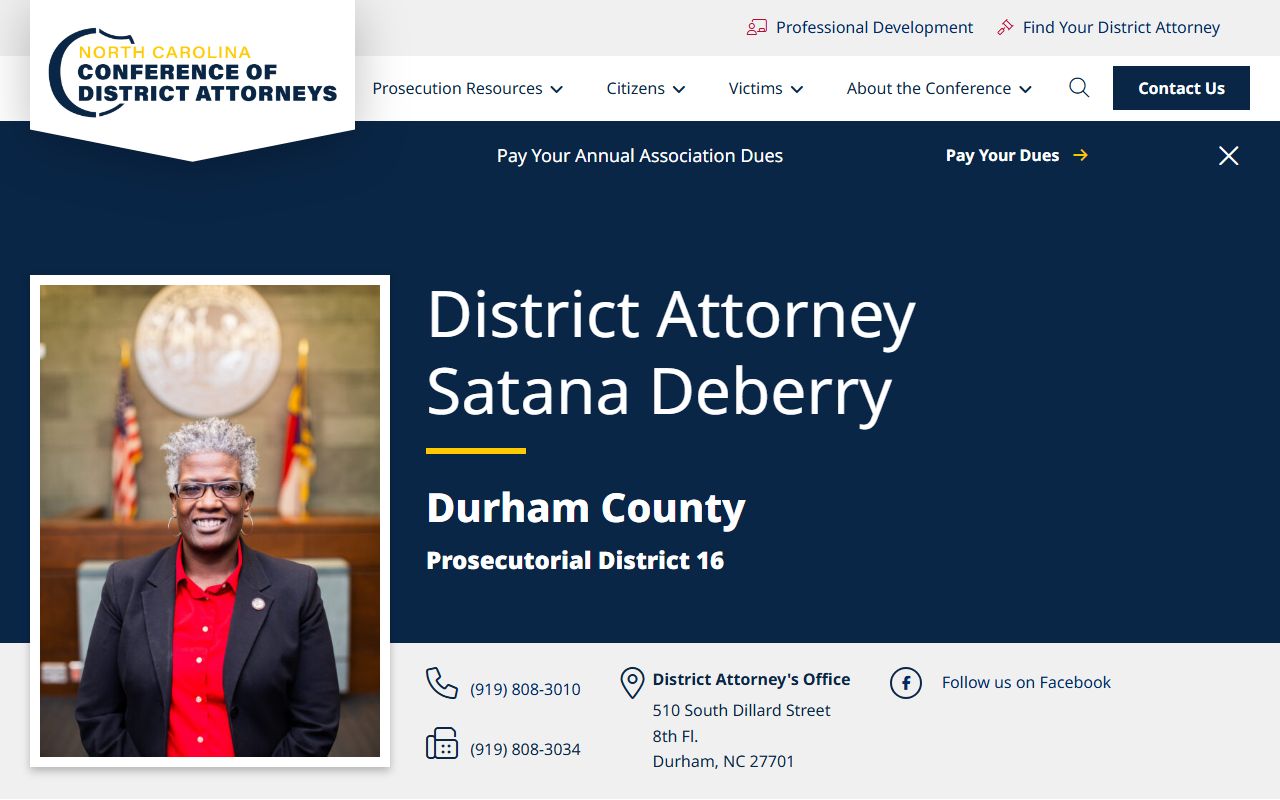
That office is relevant because prosecution decisions affect the criminal court record from screening through plea negotiation, dismissal, trial, or sentencing.
What Durham Criminal Records Show
Durham County criminal court records can include both case identity fields and event fields. A case may show the number, court division, parties, attorneys, filing date, charge date, hearing date, courtroom, judicial officer, and status. The docket can then show the procedural history. Public users may see less than parties or approved attorneys because confidential details and restricted documents are not fully visible.
| Field | What It Shows |
|---|---|
| Case Number | The Enterprise Justice identifier, often including year, criminal case type, sequence number, and county identifier. |
| Defendant | The person accused in the criminal case, with party search criteria sometimes narrowed by date of birth. |
| Charges | The filed criminal allegations, which may later be amended, reduced, dismissed, or resolved by plea or trial. |
| Attorney Information | Defense counsel or prosecutor information when exposed by the case record or hearing search. |
| Hearings | Court dates, courtroom, judicial officer, continuances, and scheduled events found through Search Hearings or docket entries. |
| Plea | The defendant's formal answer to the charge, such as guilty or not guilty, when entered in the court record. |
| Disposition | The outcome of the charge or case, including dismissal, conviction, acquittal, or other final result. |
| Sentence | Punishment imposed after conviction, including probation, fines, costs, restitution, or other court-ordered terms. |
| Financial Items | Fines, court costs, restitution, criminal attorney fees, probation or parole fees, and bond forfeitures. |
| Restrictions | Juvenile, sealed, expunged, mental-health, personal identifier, and other protected information removed from public view. |
Durham Charges vs Convictions
A charge is an accusation filed in the criminal case. A conviction is a final finding or admission of guilt. Durham County criminal court records may show charges that were dropped, dismissed, reduced, amended, or resolved with a not-guilty result. Reading the disposition and sentence fields is essential before treating a charge as an outcome.
| Point | Charge | Conviction |
|---|---|---|
| Meaning | An accusation that starts or shapes a criminal case. | A guilt finding or guilty plea accepted by the court. |
| Timing | Appears early, often after arrest, warrant, summons, indictment, or charging decision. | Appears after plea, verdict, or other final court action. |
| Record impact | May remain visible even if dismissed unless sealed or expunged. | Can trigger sentence, fines, probation, and collateral consequences. |
| How to verify | Read the docket and charge status. | Read the disposition, judgment, and sentencing entries. |
The difference between the initial charge path and the full criminal case file is covered more closely in Durham County arrest records and court charges.
Durham Dispositions and Sentences
Disposition is the case outcome. Common meanings include guilty, not guilty, dismissed, or another result shown in the case record. A dismissal without prejudice can mean the case may be filed again, while other outcomes may end the charge. A sentence follows a conviction and may include probation, fines, court costs, restitution, criminal attorney fees, or other terms.
Financial entries should be read with care. The Portal's payment function accepts eligible criminal court fees and fines, restitution, criminal attorney fees, and probation or parole fees. It does not replace legal review of the judgment. Some amounts are tied to conditions, deadlines, or probation requirements. Cash bonds, bond forfeitures, civil judgments, and other categories may have separate handling rules.
Note: A Durham County criminal court record can show a charge and still show no conviction after final disposition.
Sealed vs Expunged Criminal Records
Restricted criminal court records are treated differently depending on the legal action. A sealed record is hidden from ordinary public access, but it may still exist for limited court or agency use under law. An expunged record is removed from ordinary public court and criminal-history searches after the judge grants the proper order and the clerk and agencies process it.
| Point | Sealed | Expunged |
|---|---|---|
| Public visibility | Hidden from ordinary public view unless law or court order allows access. | Removed from ordinary public court and criminal-history searches after processing. |
| Record status | The case still exists but is access-limited. | The public record is cleared under the applicable expunction statute. |
| Common route | Order, statute, confidential case type, or protected information rule. | Petition filed in the court where the charge or conviction occurred. |
| Limits | Some agencies or parties may retain limited access. | Federal, out-of-state, or non-covered records are not cleared by a North Carolina state expunction order. |
The manifest expunction image comes from the NC Judicial Branch expunction help topic.
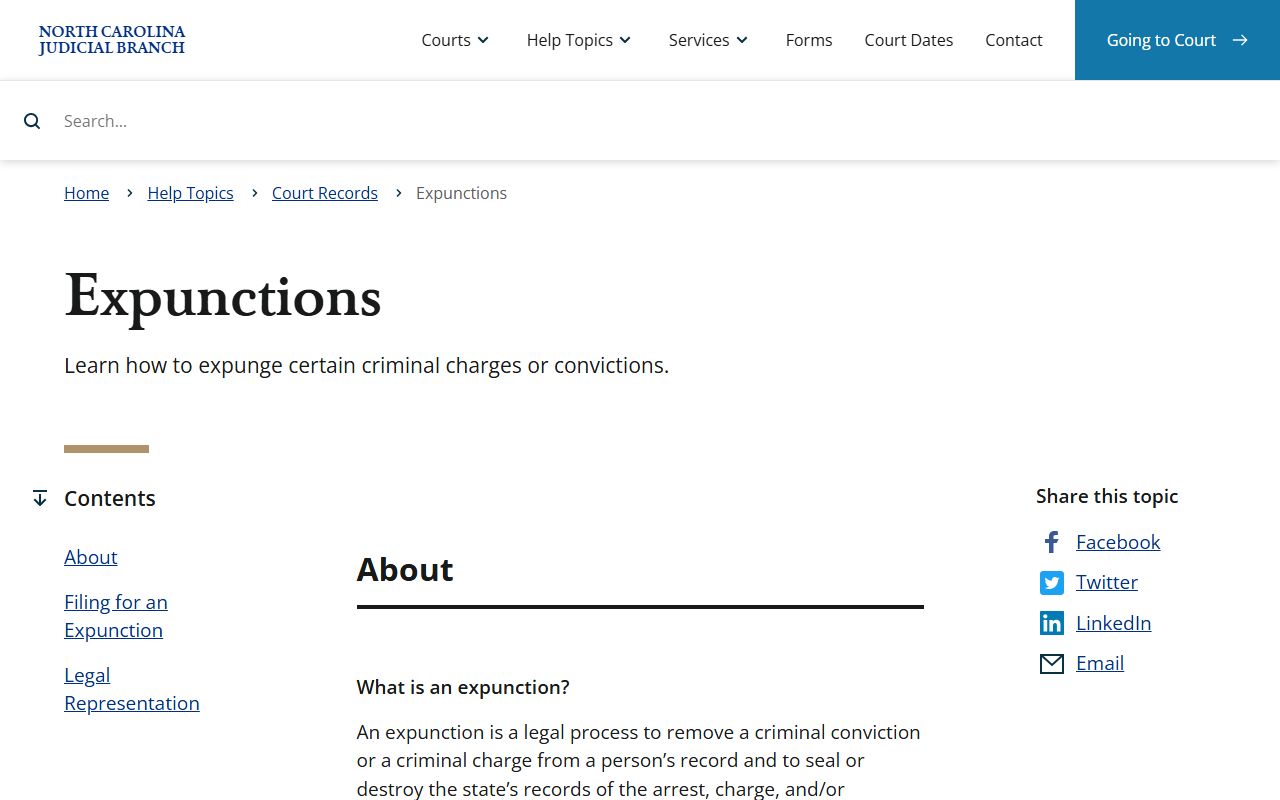
That help topic is the official statewide reference for the Durham County expunction process and the forms tied to eligible criminal records.
Public Access to Durham Criminal Records
North Carolina public access law begins with Chapter 132, but court records also rely on the clerk's record duties in Chapter 7A. Criminal procedure and expunction rules are in Chapter 15A. Juvenile restrictions are in Chapter 7B. These laws work together, so a public criminal case may be searchable while juvenile, sealed, expunged, or protected details remain unavailable.
The practical Durham County access chain is online search, public terminal, then clerk review. eCourts handles public search. Clerk public terminals can provide criminal case information at clerk offices. Paper files must be viewed at the clerk's office in the county where the case is located. Certified copies and formal background-check work should be directed to the clerk rather than relying only on online results.
Key Statutes:
N.C.G.S. Chapter 7A addresses court records, files, dockets, indexes, and clerk record duties.
N.C.G.S. Chapter 15A addresses criminal procedure and expunction rules for eligible charges and convictions.
Durham Criminal Court Offices
The District Attorney's Office and Public Defender are part of the Durham criminal case record environment, but they serve different roles. The District Attorney for Prosecutorial District 16 decides how state criminal charges proceed after arrest, screening, indictment, plea negotiations, dismissal, or trial. The Public Defender represents eligible indigent defendants in criminal, juvenile delinquency, abuse, neglect, dependency, involuntary commitment, and related cases when appointed by the court.
| Office | Durham County Role | Contact |
|---|---|---|
| District Attorney | Prosecutes state criminal cases and makes charging, plea, dismissal, and trial decisions. | 510 South Dillard Street, 8th Floor, 919-808-3010 |
| Public Defender | Represents eligible indigent defendants when appointed by the court. | 510 S. Dillard Street, Suite 4700, 919-808-3023 |
| Clerk of Superior Court | Keeps the public criminal court record and provides file and copy access. | 510 S. Dillard Street, 919-808-3000 |
The manifest defender-directory image is sourced from the North Carolina Indigent Defense Services defender directories.
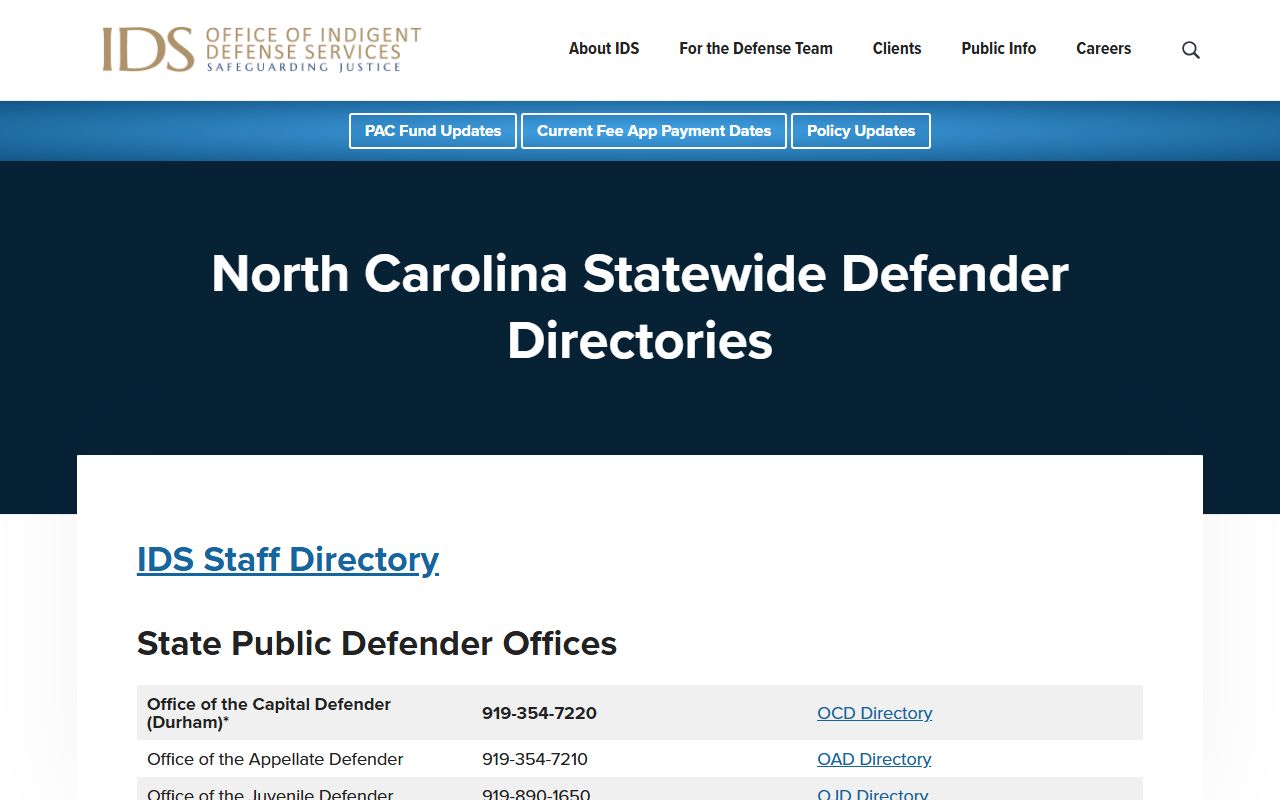
The directory supports Durham County criminal court records content because appointed defense counsel can shape docket entries, motions, pleas, and case outcomes.
Restricted Durham Criminal Records
Juvenile delinquency, abuse, neglect, dependency, DSS-involved custody, emancipation, and judicial bypass matters are handled through District Court or juvenile clerks and are not ordinary public criminal case files. Mental-health and involuntary commitment material is also restricted because it includes confidential health and commitment information. Personal identifiers such as Social Security numbers, financial account numbers, minor information, and protected addresses should be redacted or unavailable in public copies.
A person seeking access to a restricted Durham County criminal court record must have a legal basis. That can mean being a party, an approved attorney, an agency with statutory access, or a person with a court order. For public users, the safest path is to search the public case record first, then contact the Clerk of Superior Court if the record appears incomplete, sealed, older, or paper-only.