
Durham Clerk Judge Of Probate
Durham County does not use a separate local probate court for wills and estates. The Durham County Clerk of Superior Court serves as Judge of Probate. The research map states that the Clerk has exclusive original jurisdiction over probate of wills, administration of estates, adoptions, incompetency and guardianship proceedings, partitions of real property, name changes, real estate foreclosures, and petitions for surplus funds. That makes the Clerk's office the central authority for Durham County probate records.
The practical split is between Estates and Special Proceedings. Estates covers wills, probate, inventories, year's allowance, transfer of title because of death, and guardianship topics listed by the Clerk. Special Proceedings covers adult guardianships, name changes, adoptions, foreclosures under power of sale, surplus funds, partitions, cartway or boundary disputes, and the LT-264A motor vehicle lien form only. If the record is a marriage certificate or land/vital index item, the Register of Deeds may be involved, but estate administration remains with the Clerk.
The official Durham Clerk page identifies the probate-related court duties and department rooms.
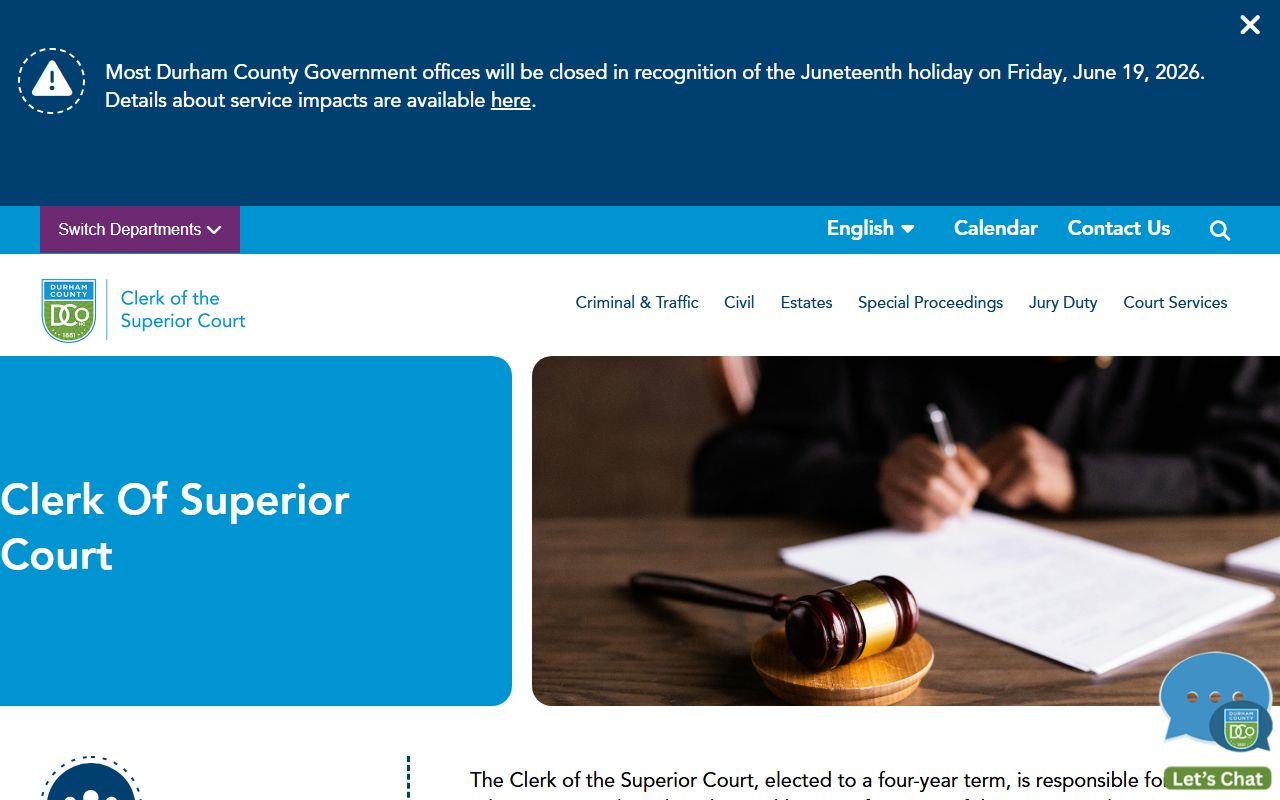
The office listing is the strongest local source for routing probate and special proceeding records.
Durham Probate Contact Cards
Probate records in Durham County are handled within the courthouse by specific Clerk departments. Calling the correct room matters because an estate inventory, a name change, an adoption file, and a foreclosure under power of sale are not handled at the same counter. Use the main Clerk number only when the correct department is unclear.
Estates Department
Durham County Courthouse
510 S. Dillard St., 2nd Floor Room 2300
Durham, NC 27701
919-808-3004
Wills, probate, inventories, year's allowance, transfer of title due to death, and guardianships.
Special Proceedings
Durham County Courthouse
510 S. Dillard St., 2nd Floor Room 2400
Durham, NC 27701
919-808-3009
Adult guardianships, name changes, adoptions, foreclosures, surplus funds, partitions, and boundary disputes.
Main Clerk of Superior Court
510 S. Dillard St.
Durham, NC 27701
919-808-3000
General clerk contact for court records and department routing.
Durham Probate Terms Defined
Durham County probate records use terms that point to the person, property, and court role involved. A short definition list helps separate an estate case from a guardianship or special proceeding before a person contacts the Clerk.
- Testator
- A person who made a will before death.
- Executor
- A person named in a will to carry out estate duties, subject to court authority.
- Intestate
- Dying without a valid will, so estate distribution follows North Carolina law.
- Guardianship
- A court process for appointing someone to act for a minor or an adult who cannot manage certain needs.
- Conservatorship
- A protective role often used in other states for property or financial management; in Durham research, guardianship and incompetency are the local Clerk terms to confirm.
- Year's allowance
- A probate-related family allowance listed under the Durham Estates department.
Search Durham Probate Records
Durham County probate records can be searched through several channels. The North Carolina eCourts Portal training identifies Estates and nonconfidential Special Proceedings as Smart Search categories. Public self-service terminals in clerk offices can also provide civil, special proceeding, and estate case information. Paper files and certified copies remain with the Clerk in the county where the case is located, so older or document-heavy estate files may require in-person review or a department-specific request.
- Identify whether the matter is an estate, will, year's allowance, guardianship, adoption, foreclosure, partition, name change, or another special proceeding.
- Search the North Carolina eCourts Portal by party, case number, or case type when public case information is available.
- Use Durham County as the location filter when the portal offers location filtering.
- Contact Estates or Special Proceedings if the portal does not show the needed record or if a certified copy is required.
- Visit the Clerk of Superior Court for paper file review when the record is not digitized or public online access is limited.
Note: Adoption, incompetency, juvenile, minor, and sealed material may require party status, attorney access, or a court order.
Durham Probate Access Fees
The Durham research did not locate an official local probate filing fee table with exact dollar amounts. The safest fee treatment is to identify the correct Durham counter and confirm current charges before filing or requesting certified copies. North Carolina's Judicial Department statutes and statewide fee schedules govern court costs, but a local page should not invent probate amounts absent a captured official fee source.
| Probate item | Durham access or fee note |
|---|---|
| Estate or will filing | File through Estates, Room 2300; confirm current filing fee before submission. |
| Special proceeding filing | Use Special Proceedings, Room 2400; fee varies by proceeding type. |
| Certified probate copy | Request from the Clerk; exact certification and copy fees should be confirmed with the department. |
| Portal search | Public case search is available for nonconfidential estate and special proceeding information. |
| Public terminal review | Clerk office terminals can be used for case information where public access is allowed. |
The North Carolina Judicial Department statutes provide the broader court-record and court-cost framework.
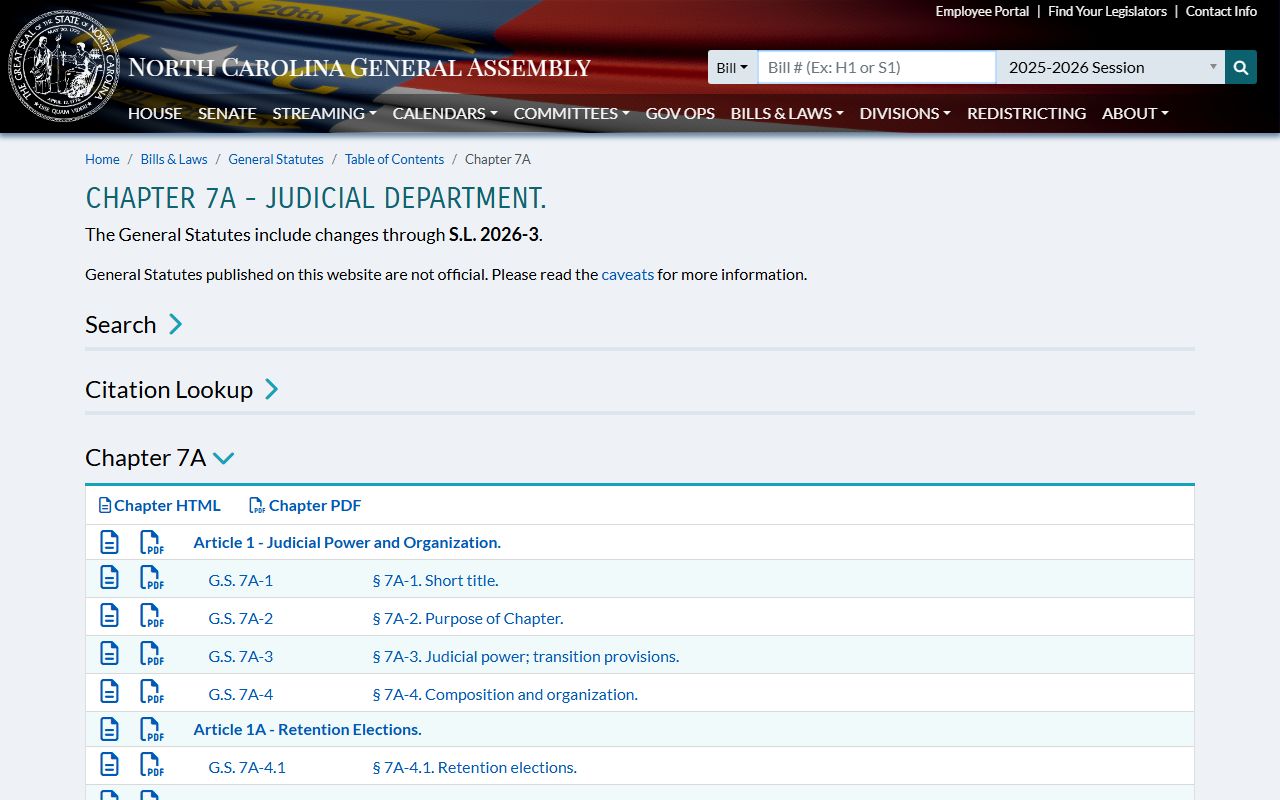
The statute source supports the court framework, while current filing totals should still be checked with the Durham Clerk.
Durham Probate Record Contents
A Durham County probate record may show the estate or special proceeding case number, decedent or respondent name, petitioner name, filing date, case type, case status, personal representative or guardian information where public, inventory events, accounting events, orders, and letters where public. The exact fields depend on whether the case is an estate, a guardianship, a foreclosure, a partition, or another special proceeding.
| Field | What it may show |
|---|---|
| Case number | The estate or special proceeding file identifier. |
| Names | Decedent, petitioner, respondent, personal representative, guardian, or interested parties. |
| Filing date and status | When the matter opened and whether it remains active, closed, or otherwise pending. |
| Inventory or accounting events | Estate filings and later administration steps where public. |
| Orders or letters | Court or clerk authority documents, subject to access limits. |
| Restricted information | Adoption, incompetency, minor, and financial details may be sealed or redacted. |
Restricted Durham Probate Files
Not every probate-related record is open in the same way. Adoption files are confidential. Juvenile and minor-related matters are not ordinary public case files. Incompetency and guardianship proceedings can contain health, capacity, financial, and family information that may be limited by law or court order. Public portal records may show only nonconfidential categories and may hide documents that are available only to parties, attorneys, or authorized users.
Durham's specialty court and justice services material is separate from probate, but it shows how local court-connected programs can intersect with treatment, accountability, and supervision. The Durham Specialty Courts page is not a probate filing source.
Program pages can give local court context, but probate access still turns on Clerk jurisdiction and record confidentiality rules.